Low Back Pain
I'm 44 years old, which apparently is the age when I and a bunch of my peers experience acute low back pain. For a condition so common, I'm surprised by how helpful it's been to compare notes with friends, and frustrated by what an unsolved, misunderstood problem this is.
I'm sharing my reflections on the experience – which lasted about two months – in hopes that they're useful for others. These thoughts are anecdotal and un-researched. I'm not an doctor, my sample size is one, your milage may vary, etc, etc.
For starters, I'll just say that you don't appreciate how much of life flows through your back until your back hurts: walking, sitting, lifting, standing, sleeping, sneezing, coughing, pooping. Back pain affects everything and quickly becomes the defining characteristic of your existence.
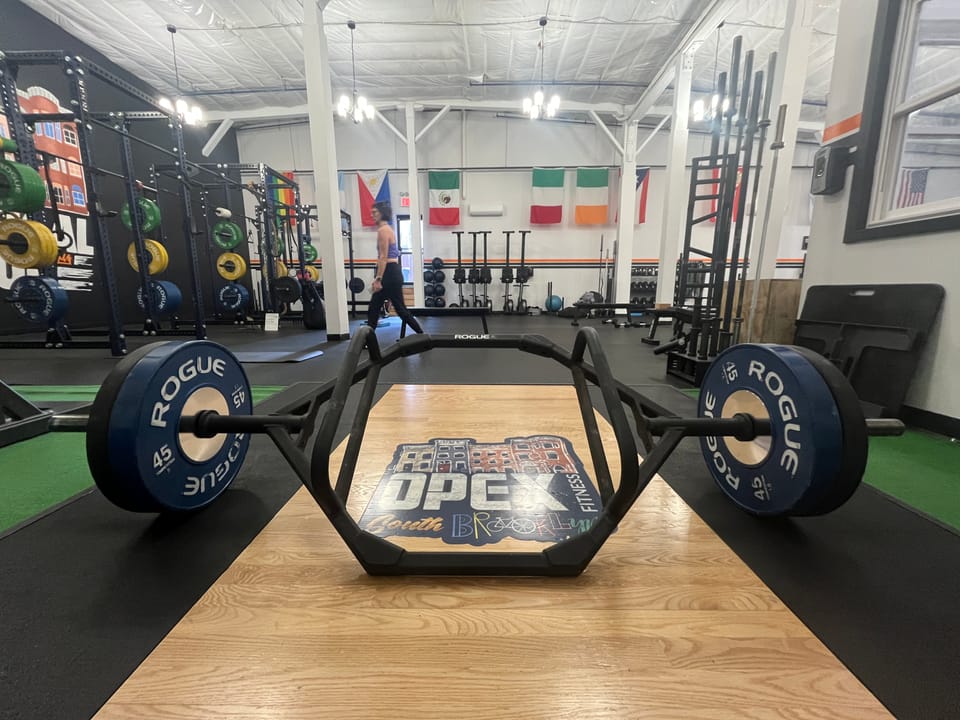
My pain started at the squat rack. I had been out of the gym for a couple weeks, I didn't warm up, and didn't reduce the weight appropriately. I could get away with this my 20s and 30s but I guess that's no longer the case. I felt a pull in my back immediately after. Nothing serious, but enough to let me know that I had screwed up.
I expected to feel better in a couple days, as I typically do when I've overworked a muscle. And indeed, a few days later I was doing things that I can normally do, like carrying moving boxes up from the basement. But immediately after I dropped a heavy box of books into our car's trunk car it was pretty obvious that, "Oh... I shouldn't have done that."
Over the years I've found inspiration in the words of one of the great poets of my generation, Vanilla Ice, "if there was a problem, yo, I'll solve it." My general approach to life is to work the problem until the problem is fixed. Same here. I went to a gentle yoga class the next morning and, according to my internal monologue, "really got in there" and "worked through the pain." Walking uphill on the way home, everything tightened up.
That's when the worst of it started.
For ten days, the pain was so bad that it was the defining feature of daily living. It started the moment I opened my eyes in the morning. I had to come up with a plan for getting out of bed: "Maybe I can put weight on my right elbow, roll to my stomach, move to child's pose..."
My only goal those days was to get out of the house, and walk to the coffee shop. It took five minutes to traverse a block that I'd normally do in one. I'd cross paths with elderly folks moving with the same gait and think, "oooooh.... I know your secret now." Then I'd get overwhelmed by the idea of living this way forever, and felt determined to do whatever I needed to do over the next forty years to avoid that fate.
Car rides were the worst. Not the ride itself, though those were uncomfortable, but what happened right after. After one 90 minute trip, I gingerly pulled myself out, stood up, and literally could not walk. It was 60 seconds before I took my first step. "Shuffling" is a generous description of the pace that followed. It was obvious to every neighbor who saw me that something was wrong.
When I was home, all I wanted to do was lay down. That was the only time when I didn't feel pain. We have a roll-out jiu jitsu mat at the house, and I spent hours laying on the floor, watching YouTube on my phone. I found myself much more susceptible to the non-stop rabbit holes of YouTube Shorts than I would typically be.
This all really disrupted our household operations. I normally do school drop-offs on the bike, but now Rachel had to take over, which meant she couldn't do her typical morning routines. I couldn't pick up any of her household tasks like grocery shopping or cooking, so she was pulling double duty, which left her feeling pretty ragged by the end of each day.
I was dismayed by how often I'd tell the girls (9 and 3), "I'm sorry... I can't... my back hurts." I was grumpy most of the day, and if they jumped on me while I was laying on the mat that we so often wrestle on, I'd uncharacteristically snap at them.
After a week, I was sort of able to get back to work: I could sit at my desk and take Zoom calls, but the pain was distracting enough that I couldn’t do any solo work that required focus: no writing or code. Whenever I encountered a task that offered any meaningful resistance, the siren call of the floor was irresistible.
I didn't want to open up Pandora's Box of Prescription Painkillers, but I found that ibuprofen and/or 2-3mg of THC edibles offered noticeable relief and mellowed my mood. Though it was nice to feel less pain, here I am taking edibles at 2pm on a Tuesday, lying on the floor watching YouTube while my wife is wearing herself out keeping our household running. Not exactly a lifestyle I'm proud of.
At Twilio I worked with a woman who lived with chronic, crippling back pain as a result of a childhood accident. She used a walker and often had to lay down during our team meetings. I sympathized with her, but can't say that I ever understood her. First couple weeks of my injury I reflected with admiration that she was able to accomplish anything.
Again, I was generally willing to take any active measures necessary to solve this problem. I tried yoga, massage, stretch, exercises provided by my trainer, laying on lacrosse balls. I kept trying to push through: I should be able to walk the kids to the playground. I should be able to carry our three year old when she asks me to. I should be able to help pack for our move.
This all made the problem worse.
Frustratingly, the only two things that made a meaningful difference in the healing process were a $30 compression back brace from CVS (like this), and time.
My brother in-law, Greg, is a chiropractor and low back pain specialist. He kindly looked over me about two weeks into this mess. He described the situation as, "your back has locked up because it's trying to protect something. You want to support what it's trying to do until that something has healed."
This ran contrary to my mental model of how to treat muscle pain. I thought the goal was to stretch and massage the tight muscle to get it to loosen up. In this new mental model, the tightening of the muscles isn't the root problem, but part of the body's response to heal the root cause. The yoga, the massage, stretching early on might have hindered my body's protective response and exacerbated the root cause.
Again, I am not a doctor, and my sample size is one. But this mental model tracks with my experience – everything I tried to do early on to directly loosen my tightened muscles seemed to prolong the injury. Only time and additional support via the back brace seemed to actually help the problem.
This all started about ten weeks ago. I'm gratefully back to 95% normal now. I am surprised and deeply frustrated by how long it took to recover compared other injuries I've experienced in my life. The worst of it lasted two weeks, but it was five weeks before I could walk with the same gait that I could pre-injury and eight weeks before I could pick up the girls without concern.
I was also frustrated by how non-linear my recovery was. Most injuries in my life have gotten a little bit better each day until they're gone. This time I'd think I was close to being out of the woods, and then have several days of regression. I suspect this was because I kept upping the intensity as soon as I felt a little better.
Through it all I was surprised by how much I would give to simply return to the state of normalcy that I take for granted every other day.
To be clear – this was a fairly benign incident in the grand scheme of things. I'm not publishing this with any desire for sympathy, but to share the experience with folks like me that, "I made a minor mistake in the gym, and instead of it being a blip on the radar as it would have been earlier in life, it fucked me up for a couple months.... and there was no lever I could pull to get better except to wait."
This whole episode could be filed under the broader category of "I'm getting older." I spent a lot of the pandemic in a existential mid-life crisis, which appeared in earnest for me between the ages of 40-42. I've exited that phase and have since come to grips with mortality in a way I didn't understand before. I'm not particularly afraid of dying young – modern medicine is pretty good at keeping us alive. But I am concerned about my quality of life my 60s, 70s, 80s.
Emma is nine, and Julia is three years old. What do I need to do today to increase the odds that I can play on the floor with my grandkids?
This episode gave me a brief taste of a life with debilitating pain and how it can impact my professional, social, and family life – along with my mood, personality, and identity:
F—. Would not recommend. Do whatever small, daily things you need to do today to avoid low back pain now, and in the back half of your life. And if you do hurt your back, just chill out for longer than you think you need to.